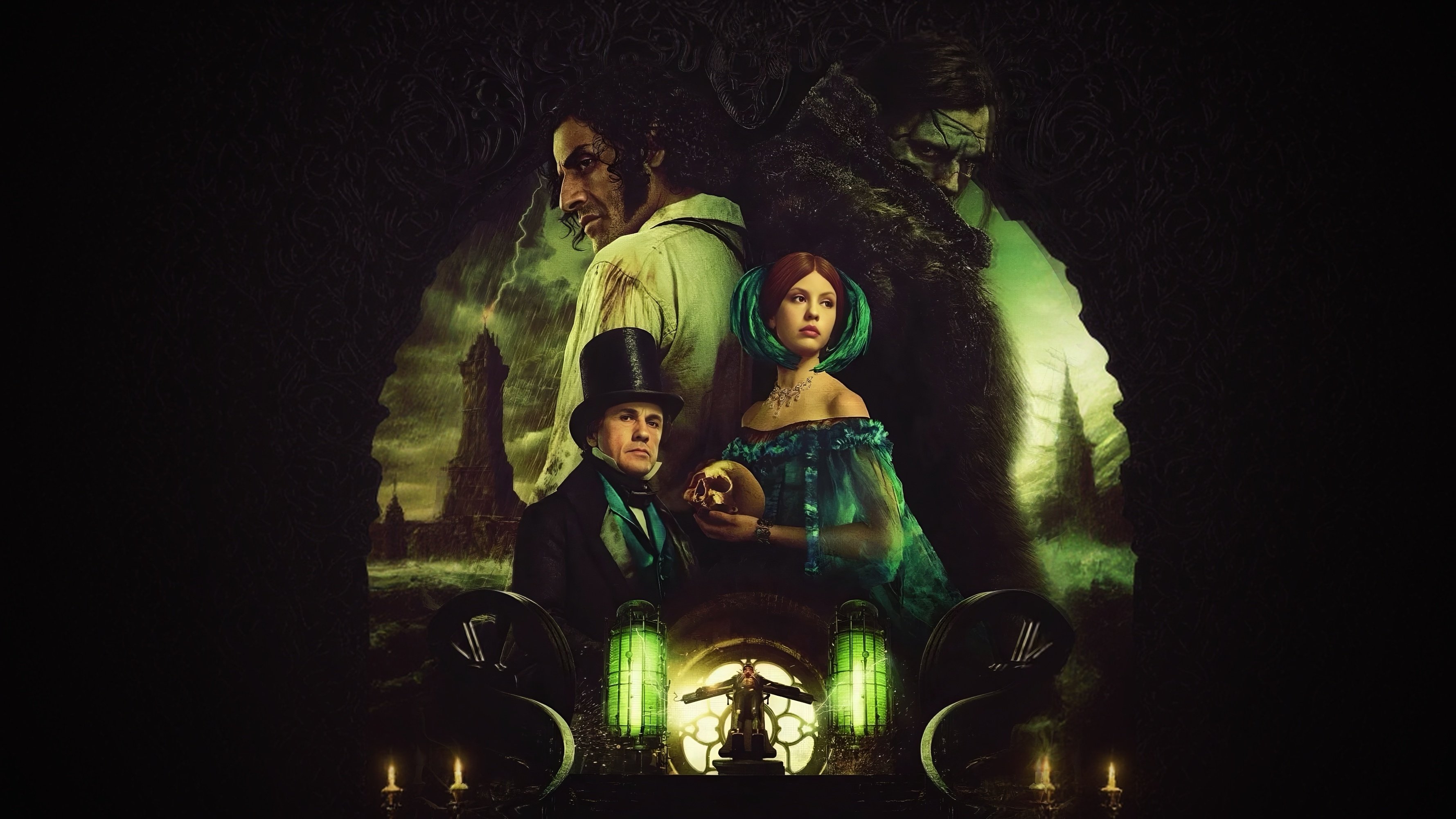
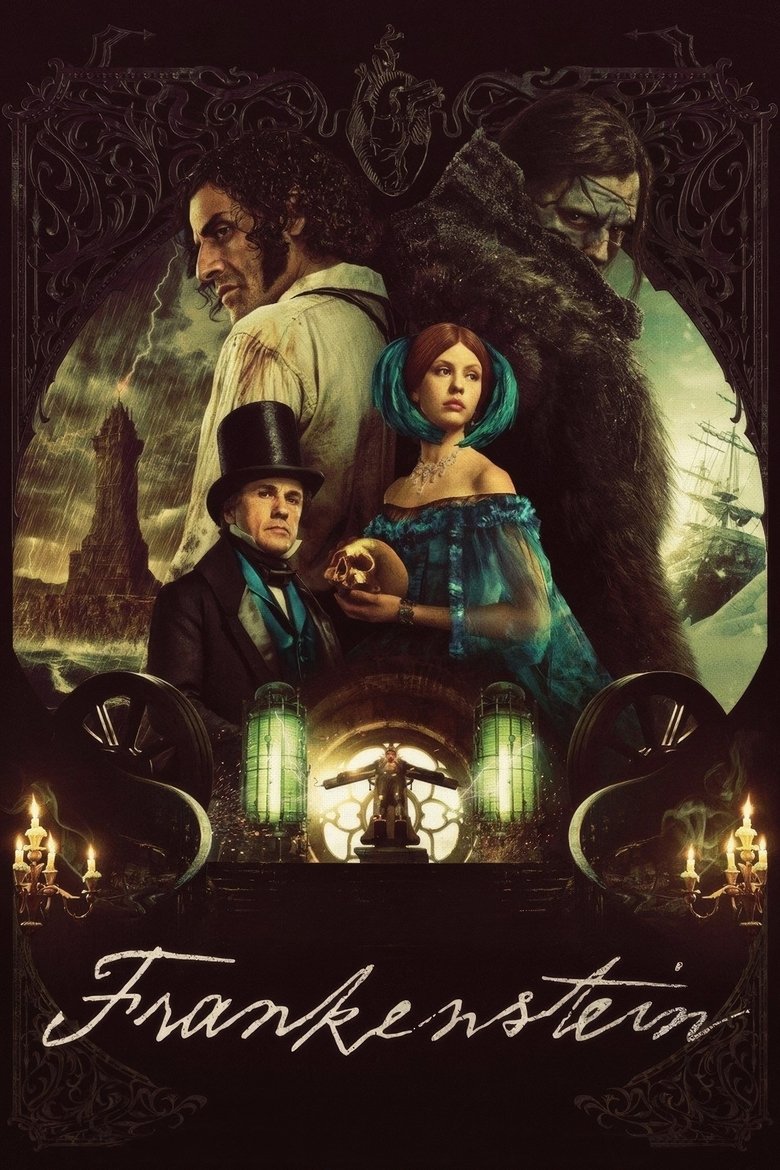
"Frankenstein" is a departure from Mary Shelly's epic work. The novel is, at its core, a cautionary tale, of man's scientific hubris, defying both God and nature.
This is, in most respects a more than decent film. Acting is, for the most part outstanding, as are the creature effects but what can be honestly said, is this film bears only the remotest resemblance, to Shelly's work.
The film establishes a dysfunctional father son relationship, mirroring Victor Frankenstein's own failed relationship, with his father, in his callous and at times, cruel, treatment of his surrogate son, the creature, he conjurs into existence.
Is that a bad thing? I guess it depends on your point of view. As an ardent Shelly fan, I was actually in the process of re-reading Frankenstein, when this was released. For me, it felt a little lacking.
The relationship between the creature and Frankenstein, felt markedly less complex. The creature in the book, is a tragic, ultimately sympathetic figure but also capable of considerable guile and cruelty. These aspects of its personality, are laregly absent, in this tale. Victor Frankenstein is, for his part, is more someone who has showen an horrific error in judgement and has no idea how to remedy his error, as opposed to someone cruel and callous.
In summary, "Frankenstein" bears only a passing semblance to Shelly's remarkable work. This is a decent film, of that there can be no doubt but it needs to viewed in isolation from the novel. The underlying message is something of a departure. Certainly its not as sophisticated, in terms of the relationship it establishes between Frankenstein and his creation. Nonethesless, worth a look.
"Frankenstein" is a departure from Mary Shelly's epic work. The novel is, at its core, a cautionary tale, of man's scientific hubris, defying both God and nature.
This is, in most respects a more than decent film. Acting is, for the most part outstanding, as are the creature effects but what can be honestly said, is this film bears only the remotest resemblance, to Shelly's work.
The film establishes a dysfunctional father son relationship, mirroring Victor Frankenstein's own failed relationship, with his father, in his callous and at times, cruel, treatment of his surrogate son, the creature, he conjurs into existence.
Is that a bad thing? I guess it depends on your point of view. As an ardent Shelly fan, I was actually in the process of re-reading Frankenstein, when this was released. For me, it felt a little lacking.
The relationship between the creature and Frankenstein, felt markedly less complex. The creature in the book, is a tragic, ultimately sympathetic figure but also capable of considerable guile and cruelty. These aspects of its personality, are laregly absent, in this tale. Victor Frankenstein is, for his part, is more someone who has showen an horrific error in judgement and has no idea how to remedy his error, as opposed to someone cruel and callous.
In summary, "Frankenstein" bears only a passing semblance to Shelly's remarkable work. This is a decent film, of that there can be no doubt but it needs to viewed in isolation from the novel. The underlying message is something of a departure. Certainly its not as sophisticated, in terms of the relationship it establishes between Frankenstein and his creation. Nonethesless, worth a look.
"Frankenstein" is a departure from Mary Shelly's epic work. The novel is, at its core, a cautionary tale, of man's scientific hubris, defying both God and nature.
This is, in most respects a more than decent film. Acting is, for the most part outstanding, as are the creature effects but what can be honestly said, is this film bears only the remotest resemblance, to Shelly's work.
The film establishes a dysfunctional father son relationship, mirroring Victor Frankenstein's own failed relationship, with his father, in his callous and at times, cruel, treatment of his surrogate son, the creature, he conjurs into existence.
Is that a bad thing? I guess it depends on your point of view. As an ardent Shelly fan, I was actually in the process of re-reading Frankenstein, when this was released. For me, it felt a little lacking.
The relationship between the creature and Frankenstein, felt markedly less complex. The creature in the book, is a tragic, ultimately sympathetic figure but also capable of considerable guile and cruelty. These aspects of its personality, are laregly absent, in this tale. Victor Frankenstein is, for his part, is more someone who has showen an horrific error in judgement and has no idea how to remedy his error, as opposed to someone cruel and callous.
In summary, "Frankenstein" bears only a passing semblance to Shelly's remarkable work. This is a decent film, of that there can be no doubt but it needs to viewed in isolation from the novel. The underlying message is something of a departure. Certainly its not as sophisticated, in terms of the relationship it establishes between Frankenstein and his creation. Nonethesless, worth a look.
An old adage in Hollywood advises against remaking the classics, since there’s a good chance the new iterations won’t live up to the quality of their predecessors (of course, given the plethora of reboots that have flooded the movie market in recent years, that admonition obviously hasn’t stopped ravenous producers from attempting to cash in). About the only way to potentially avoid the pitfalls of that trap is to devise remakes that provide different spins on their original stories, coupled with fresh new looks visually, changes akin to applying a new coat of paint. And, to a great degree, that’s precisely what viewers can expect from the latest retelling of the classic horror tale, “Frankenstein,” based on the time-honored novel by author Mary Shelley. In this current adaptation from writer-director Guillermo del Toro, the filmmaker recounts the odyssey of 19th Century scientist Dr. Victor Frankenstein (Oscar Isaac) in his attempt to overcome death by creating new life (essentially an effort to play God by reversing what’s seen as mankind’s inherently unavoidable fate). In the process, he creates a creature (Jacob Elordi) in the image of his own singular vision, one that draws upon the newly emerging scientific knowledge and technology of the day. But can his plan work? What’s more, is science by itself enough to make such a miracle happen? Or does this undertaking call for something loftier, elements rooted in ethics, morality, compassion, humanity and divine wisdom? And can a mere mortal like Dr. Frankenstein successfully pull off such an accomplishment without these qualities free of unintended ramifications? The director’s ambitions to infuse such grand notions in an otherwise-timeless tale of classic horror are indeed admirable, and the high-end look of the film is truly impressive. But are these attributes enough to distinguish this version of the story sufficiently and allow it to stand on its own? In my view, the results on this front are decidedly mixed, not so much because of failings on the aforementioned elements but because of shortcomings in other more fundamental filmmaking considerations. In particular, this edition could use improvements in pacing, writing and editing – issues not uncommon in a number of del Toro’s previous efforts – especially in the production’s opening half. For instance, the setup leading to the creature’s eventual emergence is noticeably bloated, belaboring narrative aspects that viewers are likely already well familiar with and thereby trying the patience of the typical moviegoer, regardless of how cinematically stunning the picture’s images might appear (credit this offering’s gorgeous cinematography, production design and special effects). Admittedly, the film’s second half is far more compelling than what precedes it, helping to offset some of the prevailing tedium, but it’s safe to say that the picture’s overall 2:29:00 runtime could be cut back without losing much. This version of “Frankenstein” genuinely has its strong points, but it could have used some tidying up to make it the masterpiece it aspires to be – and otherwise might have been.
Given how the woke brigade at Netflix have pretty much ruined everything they got their hands on for years now I have to say that I was not entirely optimistic when I and the kids sat down to watch Netflix’s adaptation of Frankenstein yesterday.
However, for once, they made a surprisingly good movie. Although it, not surprisingly, do not follow the book in every detail and there are quite a bit of artistic freedom taken, it does follow the main thread and the spirit of the book.
Frankenstein’s creation is portrayed as both a scary “monster” and as the victim it really is. I think the design of the monster was quite well done and “realistic” if you can use that term about a work of science fiction like this. I would have been disappointed if they had gone for the silly look with bolts sticking out of his head as in the stereotype created by the early movies.
Frankenstein himself was well played but they overdid it a bit with his psychopath character. I mean come one, he behaved like a abusive alcoholic father towards his creation from the moment he was “born”. Of course things would go bad. I know the monster gets the short end of the stick in the book as well but his behavior felt way overdone.
Anyway, overall the sceneries and the Netflix version of the story was not bad. Frankenstein’s laboratory, or evil lair if you so wish, were quite well done.
I would say that this was a very good adaptation of the story. It had depth, some gory monster action, good cinematics and not really any forced politics or woke rubbish.
Guillermo del Toro's "Frankenstein" is visually sumptuous and emotionally powerful, but it arrives at precisely the wrong moment in history with precisely the wrong message.
While somewhat more faithful to Shelley's narrative structure than other adaptations, del Toro diverges widely in emotional context. He has recast Victor's hubris and the sin of playing God into a story about generational violence: abusers of children are often abused themselves and unhealed. The novel's cruelty has been transformed into human understanding and forgiveness. This would be admirable if we lived under the rule of Pope Leo, and not under a fascist.
The problem is that Shelley's strong moral lines have been smoothed over. Victor's accountability for his monstrous creation is softened into trauma and reconciliation. The Creature forgives. Victor apologizes. Peace is made. It's beautiful, cathartic, and deeply appealing to modern audiences.
And that's precisely the danger. Modern society is largely composed of people who do not acknowledge or take responsibility for their actions. We see this every day in the political landscape forged by a pedophile, where horror is smoothed over, excused, and forgiven without consequence. Del Toro is guilty of playing to this audience, offering absolution when accountability is what we desperately need.
Frankenstein wasn't meant to comfort us. It was meant to terrify us with the consequences of our hubris.